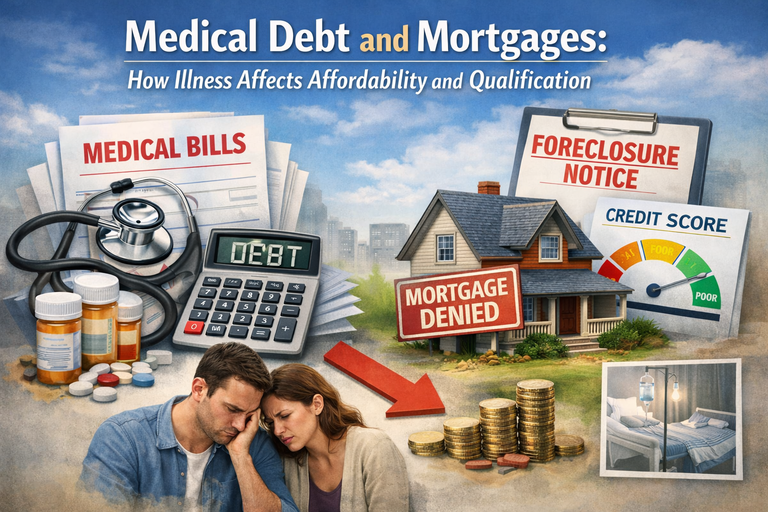
Medical debt is the
most misunderstood debt category in mortgage lending. In 2025, millions of otherwise qualified buyers worry that a hospital bill—or a health crisis from years ago—means homeownership is off the table. That assumption is wrong
and incomplete. Medical debt doesn’t automatically disqualify you—but it
does change affordability math, timing, and strategy. This guide explains exactly how lenders treat medical debt, how it affects DTI, when bankruptcy helps or hurts, and how to protect long-term homeownership sustainability after illness.
1) How lenders actually view medical debt (not all debt is equal)
Lenders separate debt into two buckets:
- Credit-impact debt (affects score and approval risk)
- Cash-flow debt (affects DTI and affordability)
Medical debt is treated more leniently than:
- Credit cards
- Personal loans
- Auto loans
Why? Because medical debt is usually
non-discretionary and not predictive of spending behavior.
Actionable tip: Medical debt hurts
cash flow more than
character in underwriting.
2) Medical collections vs medical payments (critical distinction)
Medical collections
- Often weighted less heavily in credit scoring
- Some lenders ignore small medical collections entirely
- Large collections can still affect approval indirectly
Active medical payment plans
- Always count in DTI
- Treated like any other monthly obligation
- Reduce borrowing power dollar-for-dollar
Example:- $350/month medical payment
- At 43% DTI, that can reduce buying power by $50,000–$70,000+
Actionable tip: A low-interest medical payment still hurts affordability the same way a car loan does.
3) How medical debt affects DTI (the math)
DTI formula:
[\text{DTI} = \frac{\text{Monthly debts + Housing}}{\text{Gross monthly income}}]
Example:
- Income: $7,500/month
- Other debts: $650
- Medical payment: $400
Before medical debt: [(650 + 2,800) ÷ 7,500 = 46%]
After medical debt: [(1,050 + 2,800) ÷ 7,500 = 51%] That single medical bill
kills approval at most lenders.
Actionable tip: Reducing or restructuring medical payments often unlocks qualification more effectively than raising income.
4) Medical debt vs credit score (what actually matters)
In recent years:
- Medical collections impact scores less than other collections
- Paid medical collections may be excluded from scoring models
- Smaller balances may be ignored by some lenders
But:
- Large unpaid balances still scare underwriters
- Multiple medical tradelines can signal instability
Actionable tip: Don’t obsess over score alone—DTI and cash flow are usually the real bottlenecks.
5) Bankruptcy due to medical debt: when it helps, when it hurts
Medical debt is the
#1 driver of consumer bankruptcy in the U.S. Timing matters enormously.
Chapter 7 (liquidation)
- FHA eligibility: ~2 years after discharge
- Conventional eligibility: ~4 years
- Clears medical debt completely
Chapter 13 (repayment plan)
- FHA possible after 12 months of on-time payments
- Conventional often requires discharge + seasoning
- Monthly plan payment counts in DTI
Actionable tip: Bankruptcy can
improve mortgage readiness long-term if it restores cash flow—but only after seasoning requirements are met.
6) The hidden risk: post-purchase sustainability
Lenders approve loans based on
today’s snapshot. Illness affects
tomorrow’s resilience. Buyers with recent medical events must consider:
- Ongoing treatment costs
- Insurance deductibles
- Income volatility
- Reduced emergency savings
A loan you qualify for may still be
unsustainable.
Actionable tip: If your medical costs are unpredictable, buy
below your max approval—not at it.
7) Smart strategies to qualify with medical debt
1️⃣ Negotiate medical payments
Lower monthly payments improve DTI instantly.
2️⃣ Consolidate if it lowers cash flow
Not for rate—
for monthly relief.
3️⃣ Delay purchase strategically
Waiting 6–12 months to stabilize payments can unlock better terms.
4️⃣ Choose forgiving loan programs
FHA is often more flexible than conventional for medical issues.
5️⃣ Preserve reserves
Cash reserves reassure underwriters and protect you post-closing.
Actionable tip: Medical debt strategy is about
structure, not shame.
8) When buying with medical debt is a bad idea
Pause buying if:
- Medical payments exceed 10–15% of income
- Income stability is uncertain
- Emergency savings are depleted
- Health costs are rising, not stabilizing
- You’re relying on future forgiveness or settlements
Homeownership amplifies stress if the margin is thin.
Conclusion
Medical debt does
not automatically disqualify you from a mortgage—but it changes the math. Lenders care less about
why the debt exists and more about
how it affects cash flow and stability. Illness doesn’t mean you can’t buy a home.
It means you must buy
conservatively, intentionally, and with margin. The goal isn’t approval.
It’s sustainable ownership that survives real life.
FAQs
1) Does medical debt prevent mortgage approval? No. Medical debt is treated more leniently than other debt, but monthly payments still affect DTI.
2) Do medical collections count against me? They can, but often less than other collections—especially if small or resolved.
3) Can I get a mortgage after medical bankruptcy? Yes. FHA loans may be possible ~2 years after Chapter 7 or during Chapter 13 with conditions.
4) Should I pay off medical debt before buying? Only if it meaningfully improves monthly cash flow or DTI.
5) What’s the biggest risk buying after illness? Overstretching when future medical costs are uncertain.